
Our Mission
BCU Labs seeks to draw insight and tell stories from the wealth of biking data in Boston. Our mission is to leverage the power of data through creative experimentation, learn where Boston can improve its infrastructure, whether physical or digital, and continue to empower BCU’s advocacy one pedal at a time. Through our framework of mobility justice and equity, we strive to push for positive change in our bike networks, neighborhoods, and mindsets for everybody, no matter who you are or where you ride.
Want to get involved?
Want to volunteer for BCU Labs? Whether you're a great writer, a web developer or just interest in playing around with Boston's bike data, fill out our interest form below!
Our Beliefs and Ethos
- We use data to tell stories. Stories, not data, convince people.
- We should use the existing data to highlight where gaps exist in the data.
- What we build should not require a lot of manual work to maintain.
- We should be willing to try new things and abandon them if they’re not working.
- We encourage people to present new and creative ideas, and work collaboratively to refine them.
- We work incrementally.
- We respect people and understand not everyone will agree with every idea.
- This is a supportive community of folks with many backgrounds, who are excited to learn skills from each other. We treat each other with grace and do not assume knowledge or judge people when they ask for definitions or to explain concepts.
Our Structure
BCU Labs is entirely volunteer-run and volunteer-led. Projects are loosely structured; however, everything we do is driven by a shared passion for using data to tell the story of how to make our streets safer. Volunteers lead the work, set priorities, and drive outcomes, creating a space where community expertise and evidence-based advocacy come together, while BCU staff and board provide guidance to keep efforts aligned with the organization’s mission and values.
Our Blog Posts
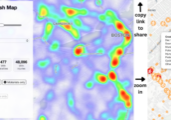
BCU Labs’ New Interactive Crash Map Highlights Why We Need Safer Infrastructure Now
The mission of BCU Labs is to draw insight and tell stories with the wealth of available data, and we’ve been building tools to accomplish this (for example, the BCU Labs Stress Map was created to help guide your rides via the calmest routes across the Boston region). Our goal with the launch of the BCU Labs Massachusetts Crash Map is to help sharpen your activism.
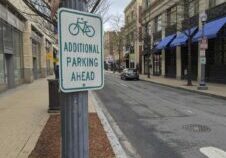
Dude, Where’s My Bike Parking?
Have you ever arrived at your destination only to spend too much time searching for a secure place to lock your bike? Settling for an insecure signpost? Greater Boston generally…
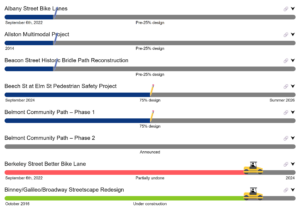
The BCU Labs Project Tracker: What Changes Are Coming To Your Street?
There is a good chance you haven’t heard if or when streets you frequent or avoid will be improved. Confusing jurisdiction lines, waiting for details two hours into a meeting,…
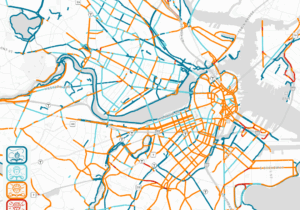
BCU Labs Launches Bike Stress Map
BCU Labs is excited to unveil our Bike Stress Map. This is a tool that helps viewers to better understand how people riding bikes or other personal mobility devices likely experience stress caused by automobile traffic while traveling through the city.
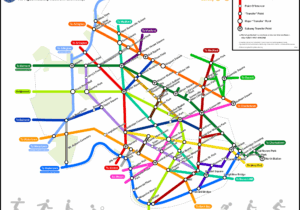
Not The Subway, Not The Highway—Introducing The Landway!
“Landway”—the network of off-street paths and separated micromobility lanes people of all ages and abilities can use, especially if they feel unsafe sharing street space with cars and trucks.
Bike Lanes WORK: 2025 Better Bike Lanes Report
This week, the city released a quantitative evaluation of the results from completed Better Bike Lane projects. Given the recent announcement of a “30-day review” of safety and transit improvements,…
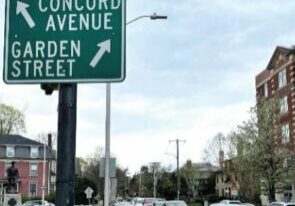
If you build it, they will bike!
How big of an effect does a small section of a high quality bike lane have? It turns out, a lot! Some cities have more than DOUBLED bike ridership throughout a whole neighborhood just by improving a single street. Garden Street in Cambridge is a great local example of what a difference street upgrades can make.

How does Boston know when and where people are biking?
This article is the first in a new series of analysis from a volunteer-lead group BCU Labs. BCU Labs seeks to draw insight and tell stories from the wealth of…
History
BCU Labs began as a collaborative effort among BCU volunteers passionate about using data to make Boston streets safer. In late 2023, volunteers came together to explore a new bike data project, sharing ideas and skills to make the work more robust and impactful.
Over the next several months, the group shaped the direction of the initiative. They decided to start with blog posts that tell the human stories behind the data, ensuring that when the website launches, there is already compelling content. Volunteers contributed to writing, reviewing, and publishing these posts, while also gathering inspiration from other organizations doing similar work. Systems were set up to coordinate the growing team, including a shared document storage structure and a Slack channel for communication.
By early 2024, as new volunteers joined, the team recognized the need for clearer structure and shared understanding. Collective meetings focused on the “why” and the “how” of the work, resulting in clarified goals, workflows, and ultimately this welcome guide.
From its inception, BCU Labs has been powered by the energy, creativity, and dedication of volunteers, with staff and board providing guidance to ensure that the work remains aligned with BCU’s mission and values.