
Advocacy in Trying Times – National Bike Summit 2026
National Bike Summit 2026
The 2026 National Bike Summit in Washington, D.C. this year was surreal. Solidarity, equity, and strategy were powerful themes. The energy was undeniable.
The League of American Bicyclists brought the community together at the Martin Luther King Jr. Memorial Library. There were troops stationed on the streets in full military gear. It was clear this was a bit different from the summits of the past. While the League’s ED’s gathered for the traditional meet up the night before the summit, Elizabeth Kiker, Executive Director of the Washington Area Bicyclist Association (WABA) was actively leading protest and legal action to save the 15th Street protected bike lanes in Washington, D.C. The Trump administration’s initiative to “restore common sense into city planning,” planned to remove a section of the protected bike lanes on 15th Street SW between Constitution Ave SW and the 14th St. Bridge. The protest ride and rally on Monday, March 23, 2026 involved hundreds of cyclists to protest the planned removal.
This year’s keynote speakers included Rodney Ellis, Commissioner of Harris County, Texas, Precinct One, political analyst Amy Walter of The Cook Political Report, and the dynamic duo Doug Gordon and Sarah Goodyear, authors of Life After Cars and co-hosts of the War on Cars podcast, who had the room fired up about re-imagining transportation for ALL people.
Sessions dug deep into the work that actually matters: getting kids on bikes in schools, community-centered traffic safety, and what we can learn from cycling cultures abroad through the Dutch Cycling Embassy. The practical conversation about a new model policy for e-bikes and personal mobility devices on college campuses was informative and forward-looking.
The growing presence of Black and brown advocates, riders, and League Cycling Instructors in the rooms, in leadership, and on the stage was not just noticeable, it was powerful. Diversity and inclusion in the cycling movement isn’t a talking point anymore; it’s becoming the lived reality of what this summit looks and feels like.
Carmen Blyden, BCU Community Organizer, Vivian Ortiz, Boston’s Bike Mayor, and I joined the mobile workshop that started at the National Museum of African American History and Culture. We were led through DC’s historical Black community, passing by murals, schools, and landmarks that tell the story of the community’s deep cultural roots and heritage, and we rode through the historic corridors of Howard University, where the legacy of Black excellence has given us visionaries like our former VP, Kamala Harris, Thurgood Marshall, Toni Morrison, Zora Neal Hurston, Ta-Nehisi Coates. The stop at Sankofa Video, Books & Cafe was intentional. Sankofa, named for the Akan principle of reaching back to move forward, grounded the ride in exactly the kind of cultural rootedness that the mainstream cycling world has too often overlooked. Wednesday’s Lobby Day then kicked it into high gear, starting with the Congressional Bike Ride before advocates descended on Capitol Hill to demand safer, more equitable streets for everyone, because bike advocacy is mobility justice.
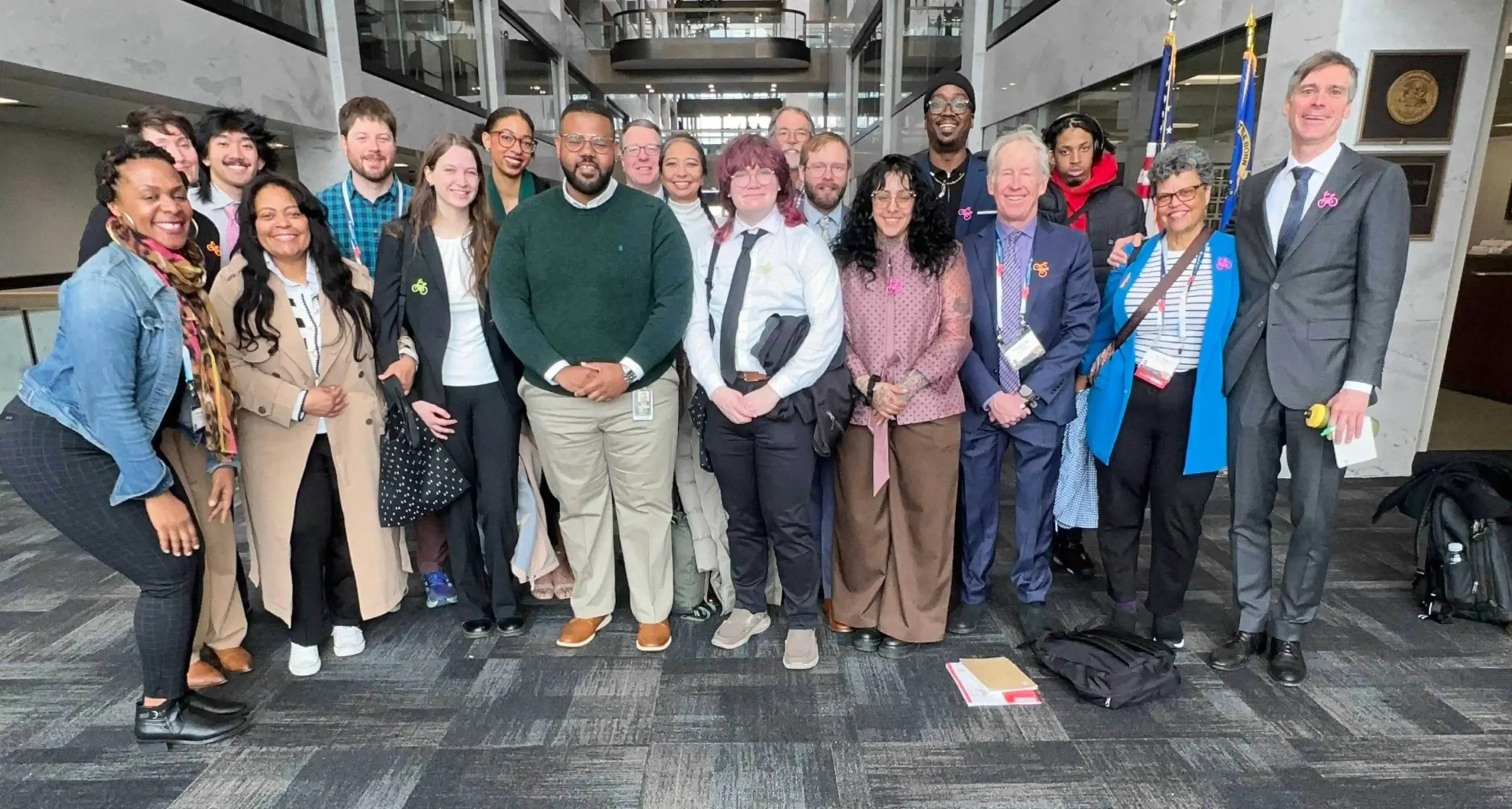
On lobby day, BCU visited the offices of Elizabeth Warren, Ed Markey, Ayanna Pressley, and Stephen Lynch. Boston resident, actress Hampton Richard joined us on our lobby tour. She portrayed the pioneering cyclist Kittie Knox in The Kittie Knox Plays, a production created by Plays in Place and supported by MassBike. Richards embodied the role in the 2025 series of plays focusing on Knox’s barrier-breaking bicycling history.
With Chairman Sam Graves threatening a transportation bill that would strip funding for bike paths and walking infrastructure, the stakes couldn’t have been higher. Thanks to MassBike for organizing lobby day for the Massachusetts organizations.
We left the summit and DC encouraged by being with our community, learning about the amazing and innovative work advocates continue to champion despite unjust cuts in funding and resources. We left with a better understanding of the work it will take to maintain our gains and the fight ahead of us to establish norms of safe streets.