
Hyde Park Ave needs safety, we need action
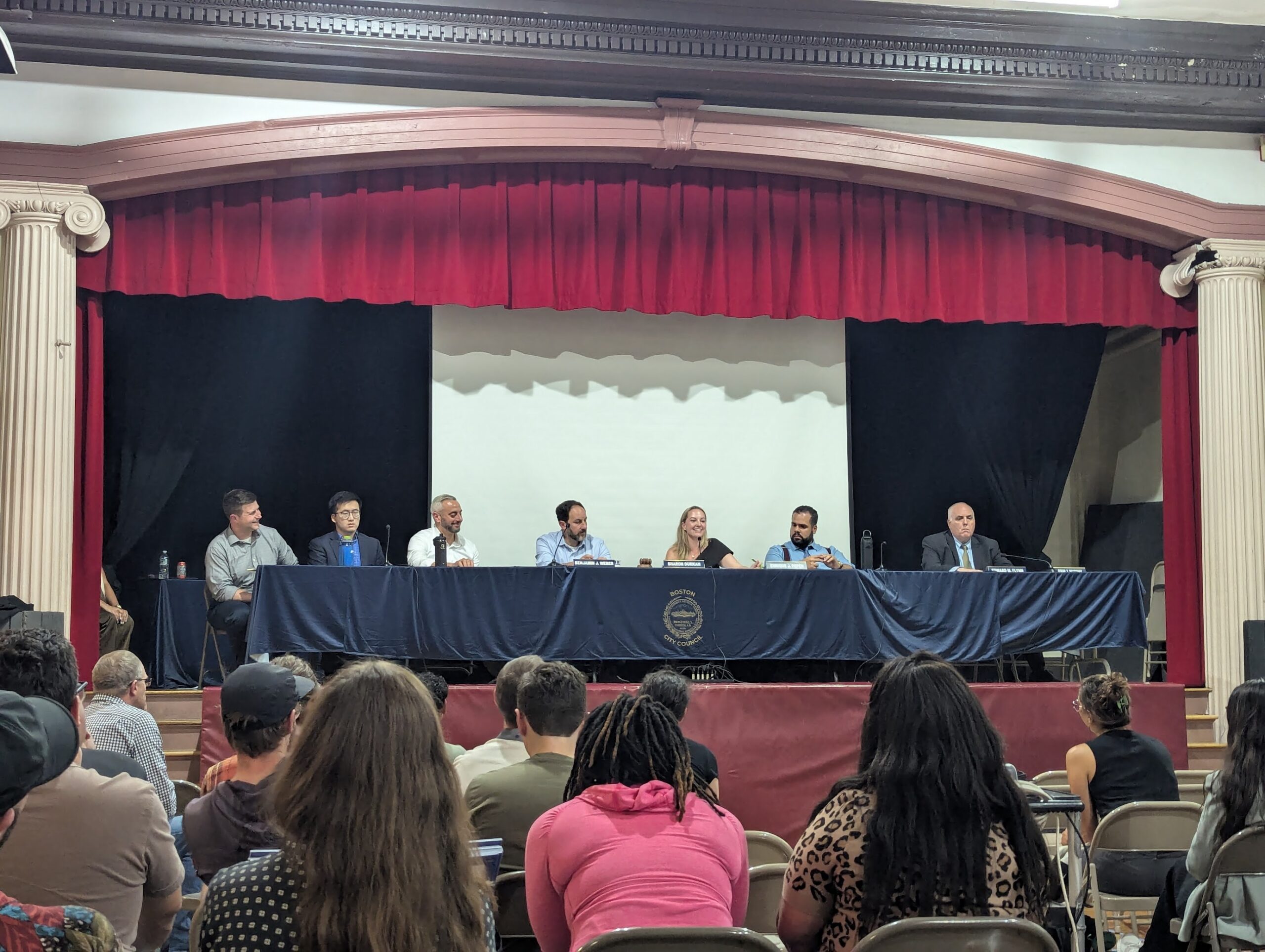
Photo credit: Anne G
Right now, in this moment, we need the city to be brave like the vulnerable road users who regularly risk crashes and death along Hyde Park Ave.
Earlier this week, on Wednesday 10/6, BCU staff attended a public hearing regarding safety on Hyde Park Avenue. An astounding 50+ residents, cyclists, drivers and families who use Hyde Park Ave on a regular basis, joined us as we advocated for desperately needed improvements on a dangerous corridor.
Below is the reflections from our staff members Carmen and Dan. If you want to view the meeting for yourself, the recording is available on YouTube here.
From Carmen
This was my first time attending a Hyde Park Ave hearing, and honestly, I wasn’t sure what to expect. I walked into a packed room, full of residents ready to share their experiences on Hyde Park Avenue, one of the most dangerous corridors in Boston for people walking and biking.
What struck me immediately was who was in the room. According to 2023 data, about 78% of the Hyde Park neighborhood, through which Hyde Park Avenue runs, identifies as culturally diverse. Yet the majority of those in attendance did not reflect the diversity of the neighborhoods along Hyde Park Avenue. I wondered: Where were these voices? I wanted to hear their stories too.
Testimonies were shared of parents clutching their children’s hands and screaming for help while cars sped by, pedestrians having to navigate uneven sidewalks and fear of crossing the street, cyclists being attacked by aggressive drivers. It was clear that residents have been experiencing feeling unsafe and sharing their concerns and fears for years.
After years of meetings and public pleas for safety improvements, residents were disappointed at the lack of clarity, movement and progress on this project, especially disappointing was the sentiment of prioritizing maintaining Hyde Park Avenue’s functionality for motorists – which to all in attendance, including the motorists who testified, agreed is dangerous and dysfunctional.
I left the hearing with a heavy heart and more questions: How many more near misses, how many more life-threatening crashes, will it take before our city leaders see safety as non-negotiable?
For me, the hearing was a stark reminder that the voices of those most affected by poor infrastructure often go unheard. If Boston is serious about being the best city in America for families, as our mayor has promised, then the safety of Hyde Park Avenue’s residents must come before politics.
From Dan
There was a great deal of tension in that stuffy gym on Monday night. This was, after all, the first real discussion about bike safety since Michelle Wu won over Joshua Kraft with 72% of the vote in the September 9th primary. In fact, Michelle earned 91% of the vote in the project area (Ward 19, Precinct 7).
After a summer of campaigns with bike lanes and realistically street safety as a whole on the chopping block, this result provided hope for many. This year has been a slow one for street improvements, and the future of Boston has been shrouded in uncertainty.
That’s why, despite this being my first time attending a community meeting about Hyde Park Ave, I could tell that there was something different in the air.
Let’s be clear on the facts: 40 people spoke during public comment, and every single one of them gave passionate testimony in favor of moving forward with a safer, more comfortable Hyde Park Ave.
Eventually, the chair (Councilor Durkan) gave up on trying to prevent the raucous applause that filled the room after each speaker was finished. The people’s reactions and applause simply couldn’t be stifled.
After the first dozen or so speakers, public comment stopped so we could hear a presentation from the city administration.
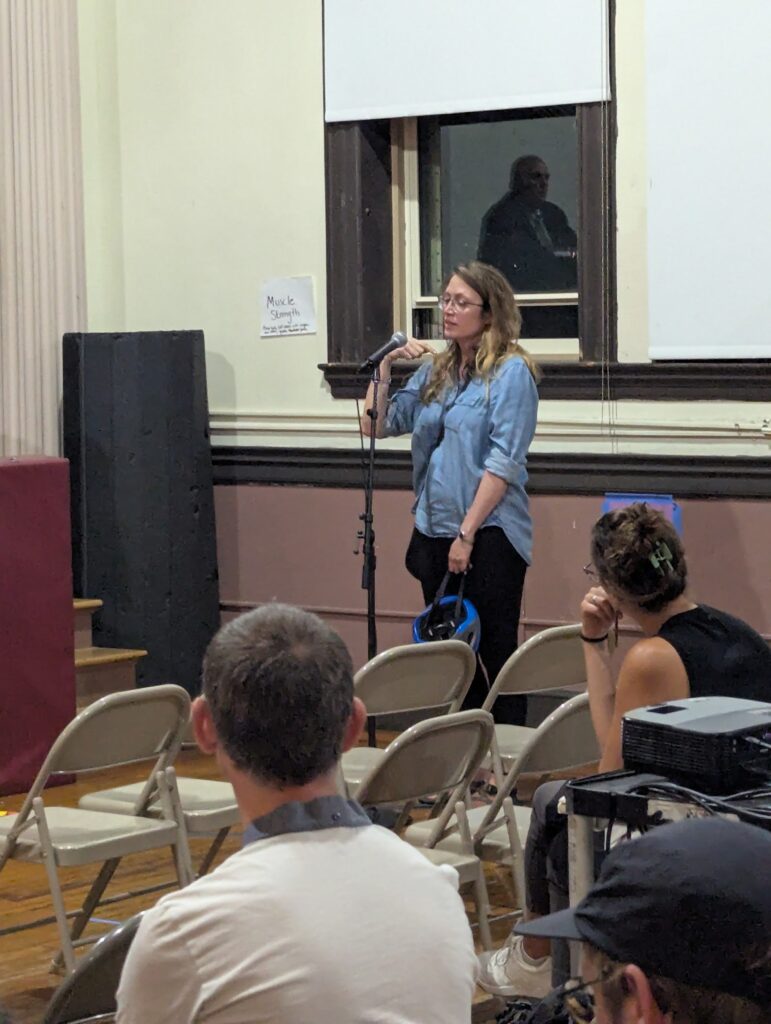
Photo credit: Anne G
The presentation could not have been more disappointing. Though Chief Jascha Franklin-Hodge was clear that the door was not completely shut on adding safe bike infrastructure to Hyde Park Avenue, he was also equally clear that it was unlikely to happen.
The presentation, and Chief Franklin-Hodge’s answers to questions posed by the councilors, effectively communicated that Mayor Wu does not intend to prioritize the safety of vulnerable road users as this stretch of Hyde Park Ave is repaved. I was expecting him to be more diplomatic, especially in the face of so many frightened and traumatized cyclists, and it was very surprising when he wasn’t. I read that as further indication that the city does not plan to act.
As a resident of the area and a cyclist himself, Chief Franklin-Hodge has ridden this stretch with his children many times. He understands what is at stake. But his argument that “the tradeoffs are tremendous” failed to consider the humanity in the room and the significant imbalance between the different modes of travel. People who are driving through the area are relatively safe, but people who are walking and biking through the area have to hold their breath and hope they don’t become a statistic. Every. Time. They. Go. Out.
The “tradeoff” we would be asking car owners to make is for them to share the road and compromise a bit of the immense convenience that they enjoy so that everybody else can navigate the corridor safely. It really does ultimately come down to a “tradeoff” between car convenience and the safety of everyone else.
It was strongly implied there is no space for bike lanes and that the priority is to maintain four car lanes – it sounded like an admission that this project isn’t going to move forward.
Think about what a shame that is. Think about how many acres of public space we are allocating to cars, four whole lanes with no space or safety considerations for anyone choosing not to travel by car.
Chief Franklin-Hodge said that the city councilors need to defer to the experts, but I contend that the experts are actually the vulnerable road users who navigate this corridor every day – the multiple people who broke down during their testimony sharing how their child was almost hit crossing the street, the person who WAS hit just last week, and now is in critical condition, the people with disabilities, including wheelchair users, who in all likelihood didn’t even feel safe enough to attend the meeting, and the people who, every day, hold their breath and hope they don’t become a statistic.
It was particularly off-putting to hear Chief Franklin-Hodge’s comment that the city has not heard from people who use the corridor but who do not live in the area. This was the ultimate moving of the goalpost, and feeds back into the idea that the city is heavily prioritizing the needs of people who drive their cars through the strip. In reality, good urban planning prioritizes the needs of the most vulnerable. I’ve been to a lot of meetings where bike lane supporters are accused of astroturfing, but I’ve never seen anything like what I did the other night. If a community in unanimous agreement is told that things can’t move forward because of the needs of some anonymous people who merely pass through, what is the message that the city is actually sending?
We certainly should hear from more people further south. But what motivation did they have to show up to the meeting after the scope was narrowed to not include the part of the road that they live near? There’s a huge dissonance between the desire to bring in more perspectives from the south, and the decision to limit the discussion to the northernmost sliver of the road.
So I go back to the election results and the mandate to greatly expand the bike network that the city had promised just a few years ago. And that’s the context in which Chief Franklin-Hodge’s comments were particularly concerning. Four years is a lifetime with which to accomplish priorities. If the city is unwilling to move forward with even the tiniest stretch of HPA mere weeks after a resounding victory, and despite the unanimous support of the community, it doesn’t bode well for how the next four years will go for safe streets advocates.
So for this reason, I think it’s important that the BCU calls attention to these comments. We need to draw a line here because if we don’t, the goalpost will just continue to shift under our feet. The mayor needs to know that we will be her biggest advocates if she is our champion, but that we are not going to accept inaction. If we don’t say something now, it will set a big precedent for the term. The time for pausing progress has passed, and we’ve now got four years to make the city safe. There are no guarantees as to what will happen after that; there never are. But right now, in this moment, we need the city to be brave like the vulnerable road users who regularly risk crashes and death along Hyde Park Ave.