
If the City Won’t, We Will: How we moved Boston to plow the bike lanes
Snow removal, for street, our bike lane, or our sidewalks, is urgently needed, especially after historic snow storms like Boston just recently experienced.. Everybody who uses Boston’s roads feels this urgency.
Cyclists need to be able to use the lanes that we fought for, and provide urgently needed safety. Pedestrians, especially those with disabilities, need cleared sidewalks and ramps. Drivers, despite Boston’s streets being well plowed, now have to deal with less space on the road, in addition to pedestrians and cyclists needing to share busy street space.
Commonwealth Avenue
In Allston, one of the most heavily used, and well protected bike lanes, Commonwealth Avenue, was unpassable because of the snow for 2 weeks after the January 26th storm.
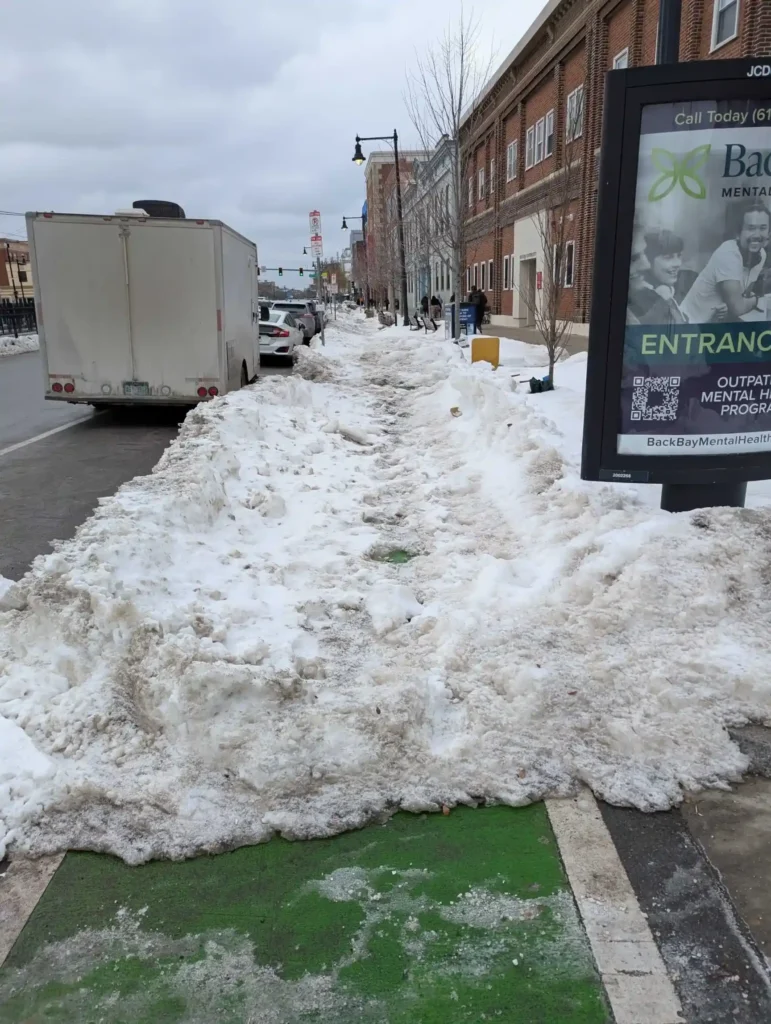
Street removal efforts piled snow nearly 6 feet high in certain areas. To add insult to injury, the lack of removal meant that much of that snow had hardened, making it not only impassible but also far more difficult to remove.
Boston’s 311 system received ticket after ticket about Commonwealth Ave’s bike lanes, though these weren’t a unique case. It’s likely that the city has been completely inundated with tickets.
After two weeks of hearing nothing, though, we decided to take matters into our own hands. If the city wasn’t going to clear bike lanes, we were.
Day of Action
On February 7th, over 20 volunteers came out with just a day’s notice, equipped with shovels and snacks to hack through the ice. Two people who saw us as they were walking by came back with shovels to pitch in and help.

The huge mounds took huge amounts of effort to remove. Big chunks of snow and ice are much easier to move with a Bobcat. But we weren’t doing this with the expectation that we’d be able to clear the whole city, or even the entire stretch of Comm Ave, we were protesting.
Commonwealth Avenue used to be one of the streets that you never saw bikes on. The sidewalk-level protected bike lane that the BCU pushed for, changed it into one of the most important arteries in Boston’s bike network, connecting Allston, Brighton, Brookline and more to the rest of the city.
The snow reversed all that progress overnight. Worse too, all the students who were used to the safety of the protected bike lane, now were forced to brave either the dangerous road or the sidewalk just to get to class. Unpleasant situations like these erode trust in our public works and deter bike ridership in the winter.
As we were shovelling the bike lane, we had countless pedestrians and cyclists stopping to thank us. Drivers honked to show their appreciation, a few opened their windows to thank us, and one driver even brought us a case of water.
Why isn’t the city doing this?
To answer that we have to understand that right now our streets drive our economy, that’s a reality that we’re aware of, and so those who say bikes are “less important” misunderstand exactly what cyclists across Boston have been asking for.
We’re not asking for bike lanes to be plowed before our streets are plowed. Buses require well-cleared streets; and deserve priority on our streets. People who bike for transportation choose to take the bus, walk or ride-share in the case of a snow storm; but buses still need to run. City buses should be safe and reliable.
Boston is highly effective at clearing the streets after a major storm. In 24 hours, nearly the entire city is safe for motor vehicle travel.
The problem is that even after 2 weeks, many major bike lanes remain untouched, and when they are addressed, they often still aren’t safe to use. We understand that this is a difficult problem for the city, but as things stand right now it’s not a question of whether or not bikes are “less important”, because from our perspective it feels like bikes aren’t important to the city at all.
We simply want bike lanes and bike paths that can be used when it stops snowing. Nowhere in Boston will you find a street that becomes a dead end because of an enormous pile of snow, or intersections that become impassable because of the snow. On a bike lane, however, this is the norm, and that’s assuming there’s even been an attempt to clear the lanes at all.
Success, finally
After our Day of Action, we are proud to say that now there are more cleared, usable, passable bike lanes. The huge amount of press we received showed the city that sometimes small actions like ours can drive change.
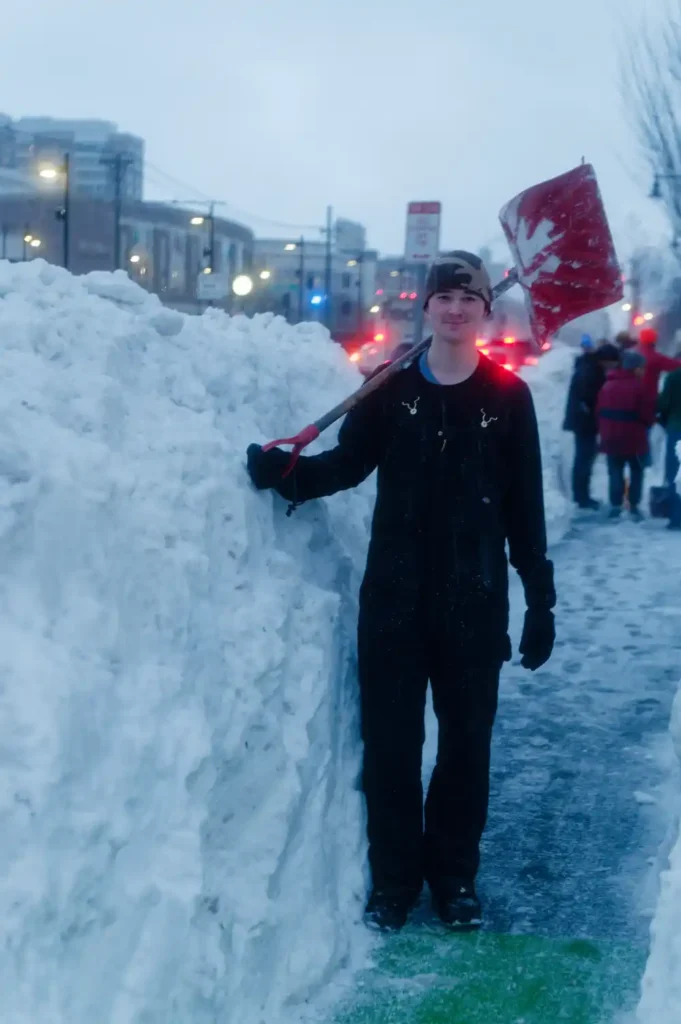
Commonwealth Avenue was cleared out in the following days, along with Washington St in Downtown and parts of Mass Avenue.
It’s undeniable that without our day of action, the city would have quietly waited for the snow to melt on Commonwealth Avenue’s bike lanes. Unfortunately this may still be the case on many major corridors.
Despite this however we need to thank the city for their efforts to show that people who bike matter in our city. We hope that we can continue to build a good faith relationship between the city and the safe streets community and continue to foster the kind of trust that’s in such urgent need in our city and in our country.
Want to read more? Check out the press this day of action got:
- Universal Hub – City wouldn’t clear a Comm Ave. bike lane, so some bicyclists showed up today with shovels
- Daily Free Press – ‘This isn’t something that we should be doing.’ BU students, local volunteers clear snow from campus bike lanes following lack of city, university response
- StreetsBlogMASS – While City Hall Dithers, Boston Cyclists Union Takes Snow Removal Into Their Own Hands
- Boston.com – Cyclists clear snow from Comm. Ave. bike lanes after storm, call on city for accountability
- WHDH – ‘Annoying and unsafe’: Boston cyclists frustrated over lack of bike lane snow removal
- Allstonia – Residents raise concerns about city snow removal following recent storm