
A Look Into Black Cycling History – BHM 2026
The Boston Cyclists Union has been celebrating Black History Month this year, 2026, by digging into the Black men and women who made their marks on this history of bikes from the very beginning. The following excerpts are from a social media series done over the course of February which go over 6 figures from the late 19th century all the way to the current day.
This list is not exhaustive, there is so much more history, both known and yet to be discovered. Did you know that the earliest patent for pannier bags was invented, designed and published by a Black man? History is, of course, rich with facts like this. We encourage anyone with a desire to do more research, or if you know more history to reach out to us at info@bostoncyclistsunion.org. We’d be more than happy to hear from you!
Major Taylor
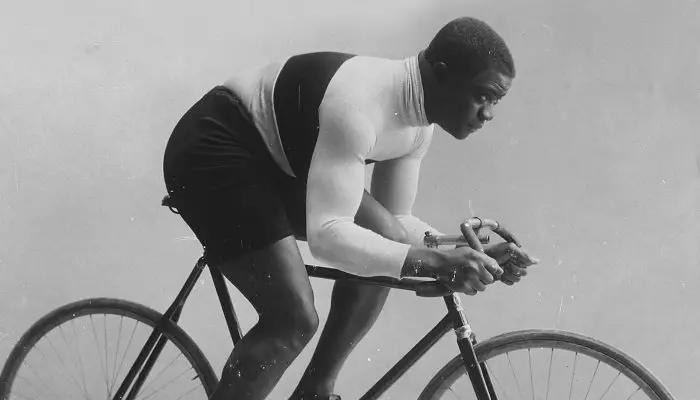
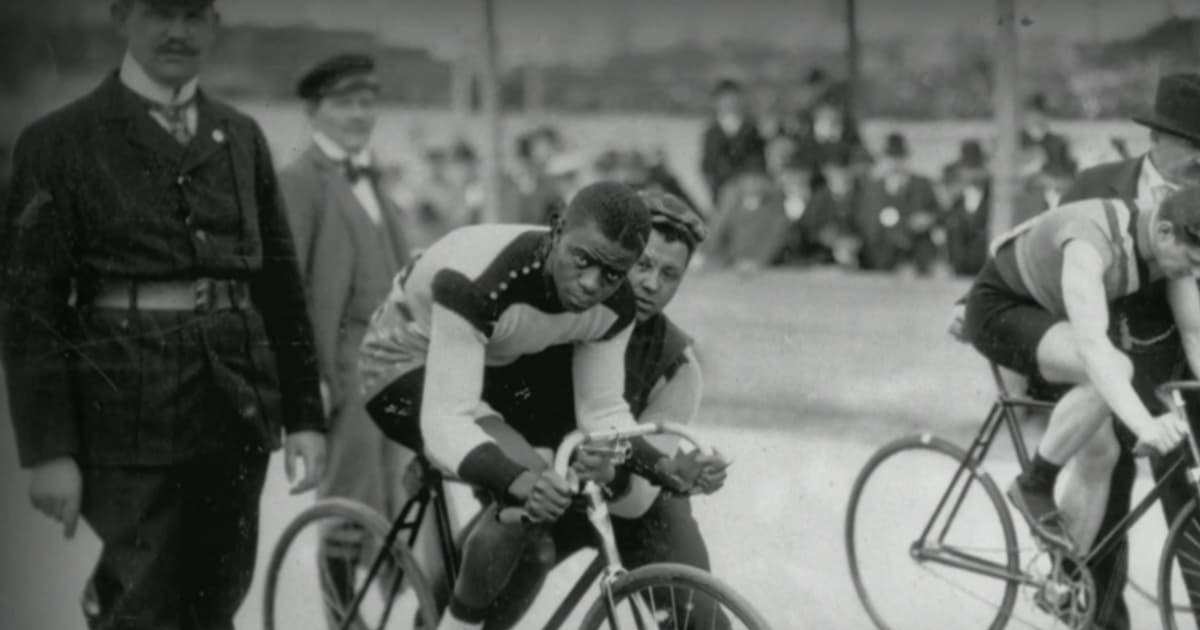
Marshall Walter “Major” Taylor was a track and race cyclist born in 1878. It was clear that Taylor was an incredibly gifted cyclist when he won his first race at the age of 12. His extraordinary speed and athletic ability earned him the nickname “World’s Fastest Man.”
Throughout his career, Tayor won numerous races, and established seven world records. He achieved all of this in spite of harsh racial discrimination. He was banned from races, clubs, and even attacked during races, but his perseverance made him an icon to Black athletes from his time to today.
Taylor had moved to Worcester, Massachusetts early in his life and there are still numerous memorials in his honor including Major Taylor Boulevard.
Kittie Knox
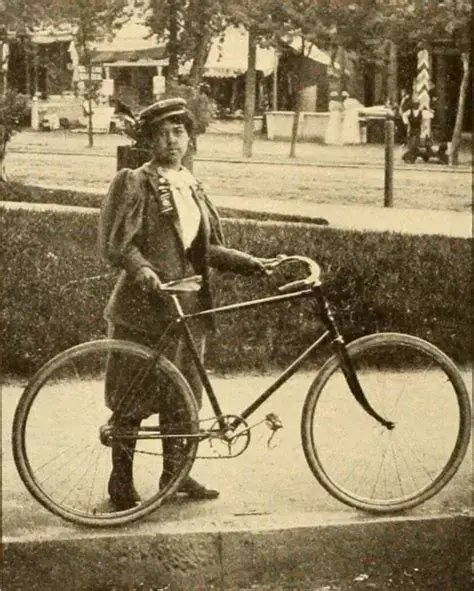
Boston’s own Kittie Knox was the first Black American in the League of American Wheelmen, the major cycling club in America. Later, when the organization became white-only, her membership was maintained, and she continued to race with the club because of her love of cycling.
In addition to her cycling skills, she was also known for wearing pants on her bike. While this may not seem unusual today, this was something that was unheard of for women at the time and was highly controversial.
Kittie’s life showed resistance to both racism and misogyny and set a strong example of how we all can pave our own paths in spite of oppression and unjust norms.
Unfortunately Kittie passed away at the young age of 26 to cancer. She is buried at Mount Auburn cemetery, and memorialized in a Cambridge bike path, as well as an annual ride put on by BCU partners MassBike and more.
25th Infantry Regiment Bicycle Corps
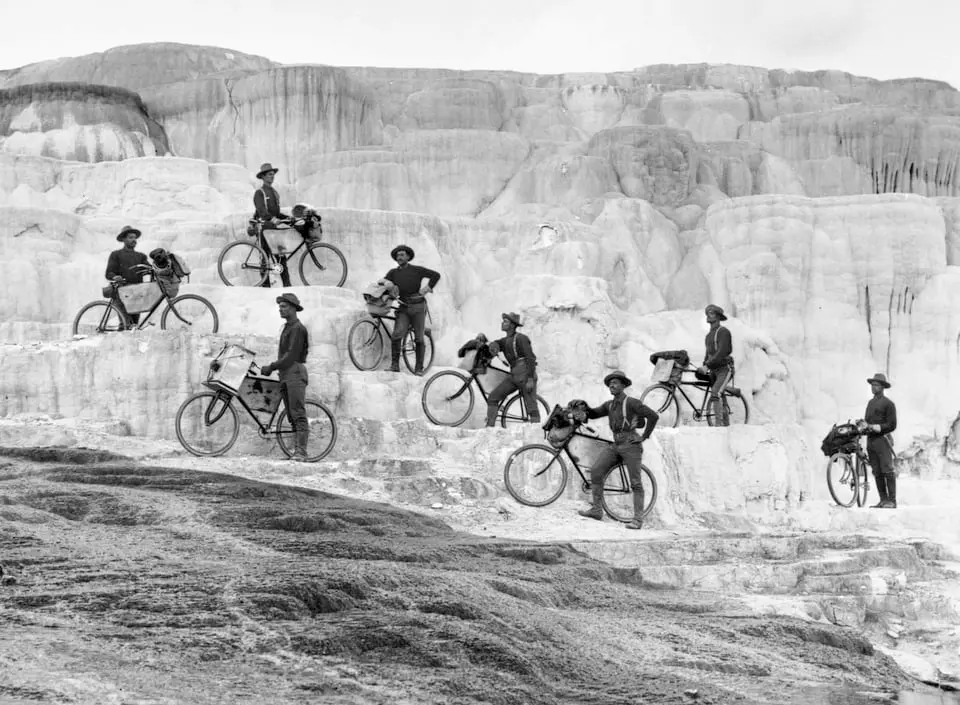
The Buffalo soldiers were regiments of entirely Black troops, an evolution of the United States Colored Troops (USCT).
The USCT started initially as a means of recruiting new men to fight for the Union when white troops were running thin, but troops like the famous Massachusetts 54th regiment, famously anti-slavery and recruited by Fredrick Douglass, proved that Black soldiers were willing to fight for the freedom of the south.
The 25th Infantry Regiment Bicycle Corps was formed nearly half a century later in 1895, during non-war times when General Nelson A. Miles, who wanted to prove that bicycles could be an effective long distance mode of travel for troops.
Led by Lieutenant Moss, a team of volunteer Buffalo soldiers travelled on excursions ranging from 800 to 1900 miles across the US all via bike, all while carrying food, ammunition and other supplies. Unfortunately the “safety bikes” at the time proved unreliable and needed frequent repair.
Advancements in bicycle design led to them playing a crucial role in militaries from that point on. But the foundations of this idea is in large part thanks to the efforts of those volunteer Black soldiers.
1928 NYC → DC TOUR
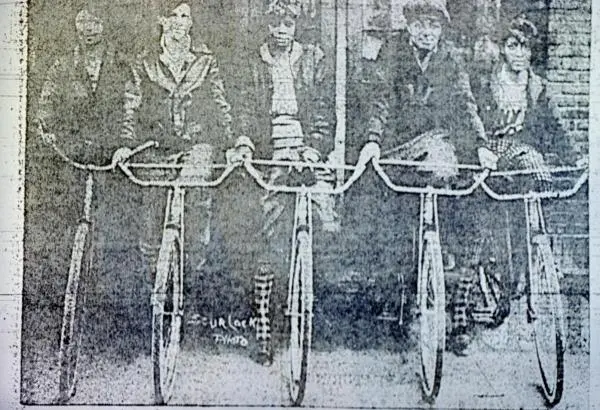
In 1928, cycling was not widely accessible, and it was certainly not seen as a space for Black women. Bicycles were heavy, single-speed machines with unforgiving tires and none of the engineering advantages riders are accustomed to today. More significantly, cycling culture in the United States was shaped by racial and gender exclusion, largely dominated by white men and structured to keep others out.
And yet, on April 6, 1928, five young Black women issued a bold and brilliant challenge to their peers: Could you ride from New York City to Washington, D.C. in under three days?
On day one, they rode approximately 110 miles to Philadelphia.
On day two, they continued 40 miles to Wilmington, Delaware.
On day three, they completed more than 100 miles into Washington, D.C.
More than 250 miles. On single-speed bicycles. In an era that offered them little protection, little recognition, and even less permission.
Their journey was not just athletic. It was defiant. It disrupted narrow ideas about who belongs in public space, who belongs in sport, who belongs in motion.
Their journey challenged the stereotype of who a cyclist is or can be, and what they look like.
The fact that we know this story at all is remarkable. It invites an even deeper question: How many more rides, how many more acts of courage and joy like these women’s have yet to be uncovered?
Today, their legacy lives on through the 1928 Legacy Tour organized by Major Knox Adventures, and through long-distance rides like Boston Cyclists Union’s own Bos/treal.
These five women did not wait for permission. They rode anyway.
The question is not whether they were capable. History has answered that. The real question is: Will we continue their legacy?
Monica Garrison
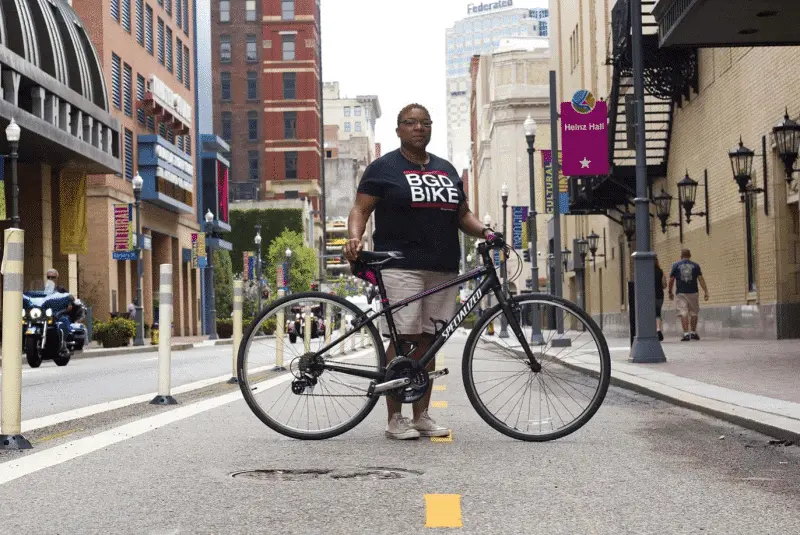
In 2013 Monica Garrison founded Black Girls Do Bike, a movement creating community, visibility and joy for Black women on bikes.
Today hundreds of BGDB chapters exist across the world, empowering Black women leaders to lead their communities on two wheels.
By creating space for Black women in cycling, Monica Garrison has spread a contagious love for biking for Black women around the world.
Her legacy through Black Girls Do Bike is historic, though it’s happening in the present day. The BCU looks to her work as a crucial guide towards building mobility justice and an inclusive biking community in Boston.
Through rides like last year’s Boss Babes on Bikes, the BCU is planting the seeds for a potential chapter of BGDB or similar. We hope to keep expanding on these efforts and show that Black Girls DO Bike!
Bike Life A.K.A. #NewEnglandBikeLife
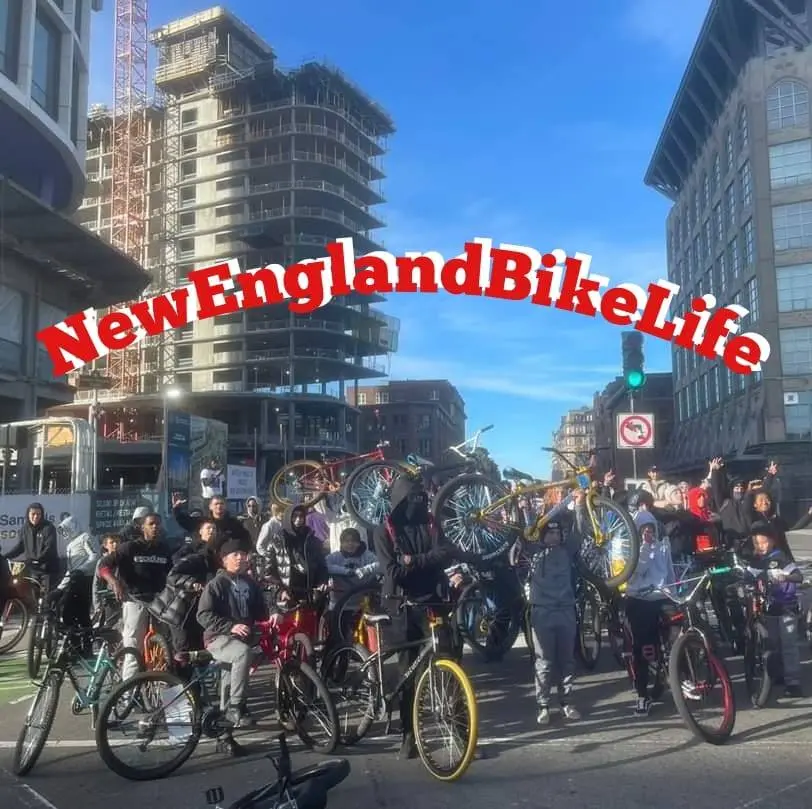
NewEnglandBikeLife hosts ride outs and events which have encouraged hundreds of Black youth and youth of color to get on two wheels.
If you’ve ever seen a huge group of youth on bikes, popping wheelies and showing extreme skill on BMX bikes, it’s probably BikeLife.
The BCU sees groups like BikeLife, and ride out culture generally as an incredibly healthy way to get youth into community, encourage them to get outside, and have fun. Unfortunately like so many groups of Black young men, they are unfairly targeted by the police and mainstream media.
These talented youth are our future. Their love of biking should be cultivated, not criminalized.