
Mayor Wu’s Dangerously Underwhelming New Street Safety Plans
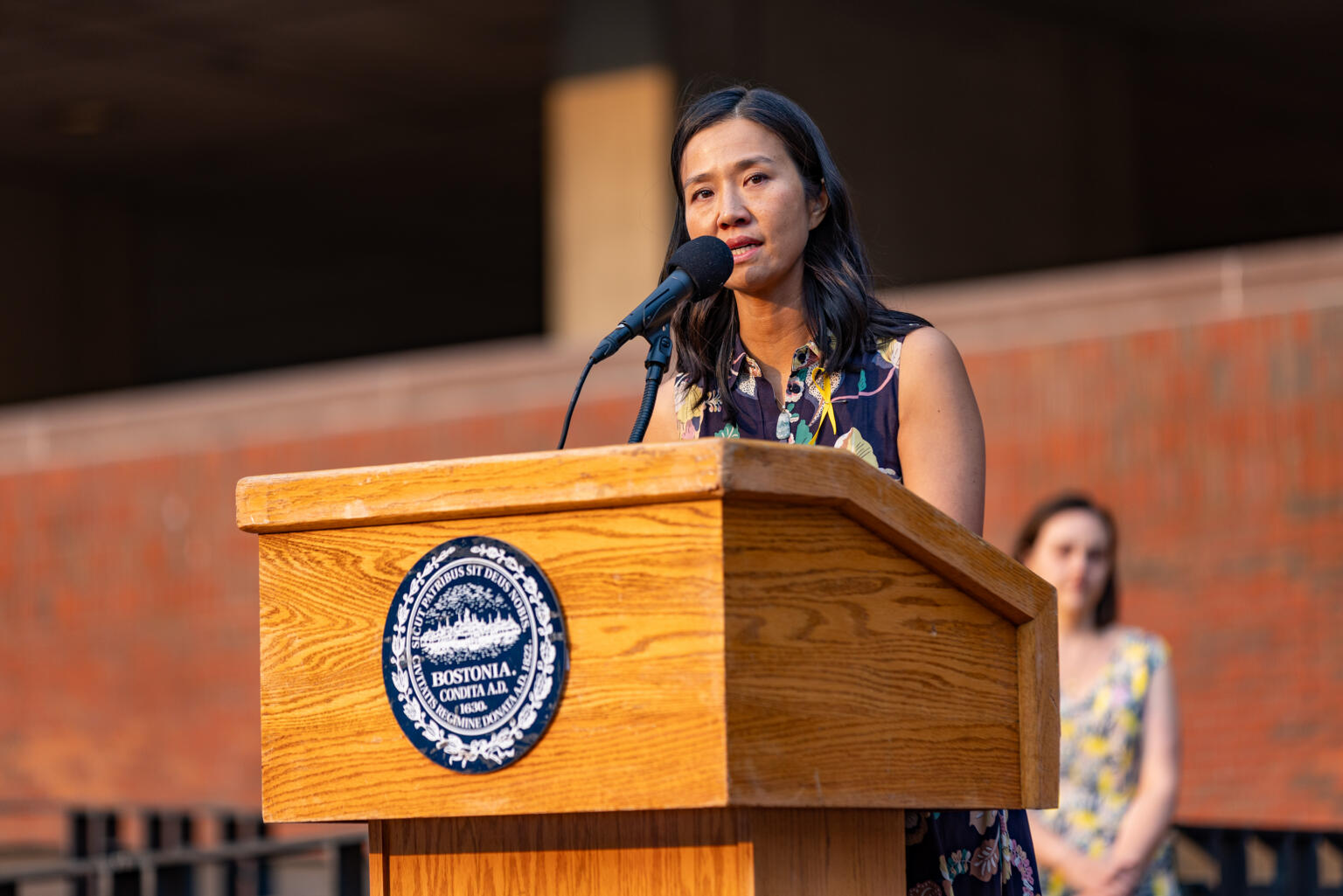
Mayor Wu’s Friday July 24th letter includes several important commitments. These include:
- Installing more permanent cast-in-place concrete barriers along bike lanes
- Developing truck safety legislation with stronger side guard requirements and enforcement
- Consulting outside experts to assess the Streets Cabinet
- Evaluating the intersection where Louisa was killed
- Providing monthly Vision Zero dashboard updates.
These are meaningful steps, but they are not enough.
Unfortunately, these commitments amount to maintaining the unacceptable status quo that has existed for more than 500 days during the “30-day pause” on street safety projects. Public records have shown that this prolonged delay was driven by the concerns of a small number of highly connected and influential individuals, while residents, advocates and neighborhood organizations repeatedly urged the City to continue implementing widely-supported street safety improvements.
The letter contains no acknowledgement of those decisions, no accountability for the harm they caused, and no apology to the communities whose voices were ignored. It does not commit to unpausing all delayed street safety projects within 30 days, publishing construction timelines for every delayed project, restoring funding that was reduced, or returning to a “build fast and improve as needed” approach that has successfully delivered safer streets in Boston before.
Does this letter truly honor Louisa Gag’s legacy? Back in 2017, Louisa authored Not On A Shelf for LivableStreets Alliance, outlining how Boston could fulfill the commitments of GoBoston 2030 by building projects instead of allowing them to become trapped in endless planning and study. This letter commits to additional assessments and evaluations rather than embracing the urgency and implementation-focused approach Louisa championed throughout her career. Between the numerous reports and plans from the city and the safe streets advocacy community’s suggestions, the City knows what actions to take. What Boston needs is political will.
The letter notes that Chris Osgood and Tali Robbins will oversee the Streets Cabinet while an outside assessment is conducted. However, it provides no explanation for the leadership changes, what authority they have to advance projects without political interference, or how decision making will change going forward. After more than a year of delayed projects, the public deserves a clear explanation of what failed, what is changing, and how future decisions will be insulated from political pressure.
Equally important is the need to restore confidence within the City’s own transportation staff. Many Boston Transportation Department employees have described feeling disempowered, second guessed, and fearful that advancing professionally-supported safety projects could jeopardize their careers. Louisa was one of those professionals who dedicated her work to making Boston’s streets safer. The administration should make clear that transportation professionals will be empowered to apply their expertise, that evidence-based safety decisions will be respected, and that staff will not face retaliation for advancing projects consistent with the City’s adopted policies.
The proposed expansion of cameras and automated enforcement also requires greater transparency. Safety cameras that record only vehicle information and traffic violations are fundamentally different from surveillance systems capable of tracking individuals, storing video, or expanding law enforcement monitoring beyond traffic safety. The City should clearly define the technology being proposed, how collected data will be used, who will have access to it, how long it will be retained, and what safeguards will protect civil liberties before asking the public to support expanded camera enforcement.
Finally, transparency and accountability must extend beyond promises. The administration should publish measurable benchmarks tied directly to the commitments of Go Boston 2030 and Vision Zero, including publicly accessible timelines for every delayed project, quarterly progress reports, explanations for any missed deadlines, and regular public briefings on implementation. Residents should be able to measure progress against commitments, not aspirations.
Mayor Wu said at Louisa’s vigil that Boston should be a city where people can grow old. That vision will not be achieved through additional studies. It requires rebuilding public trust through transparency, restoring confidence in the City’s transportation professionals, and delivering the street safety improvements that Boston has already spent years planning and repeatedly promised to build. Mayor Wu’s letter is a start, but it still falls well short of demonstrating that the City is prepared to meet this moment with the urgency, accountability, and action that Louisa’s legacy and Boston residents deserve.
How you can help
It is critical that Mayor Wu, the City Council, Streets Cabinet leadership, and Boston Transportation staff hear from the whole community that we expect more from them and will support them when they do execute a bold enough vision for street safety that will lead Boston to achieving Vision Zero and preventing ALL serious injuries and fatalities. Using the Safe Streets Can’t Wait action page, let Mayor Wu and City Council know the following:
- Email Mayor Wu (mayor@boston.gov). Commend her for the initial steps she detailed in her letter while demanding they be only the first steps. Push for the following:
- Restore all removed or damaged protection
- Resume all previously initiated streets projects
- Formalize new leadership and empower BTD to implement safety improvements without fear of retaliation
- Resume the Safety Surge Initiative, resuming previous pace of speed bump construction
- Email the City Council (city.council@boston.gov) and cc info@bostoncyclistsunion.org. Ask that they:
- Exert their oversight of the mayor and the rest of the executive branch to ensure the city is fully committed to Vision Zero
- Support the proposed ordinance to have the City report a comprehensive accounting of every significant streets project, what’s been delayed, and what projects have been cancelled and why
- Enact a Safe Streets Ordinance, mandating the construction of connected, protected corridors across the City by January 7, 2030, with segments mandated for completion each year until then
You can also write an op-ed or letter-to-the-editor. Send letters to your local publications detailing your personal experiences and why street safety is important to your life. Let us know when you have been published at info@bostoncyclistsunion.org.
What we are reading
- Dear Boston: We Need to Prioritize Making Our Streets Safer – Councilor Pepen
- Louisa Gag’s death demands a full investigation — and an end to Wu’s slowdown on bike lanes – Boston Globe
- My bicycle could save the world … if you’d all just stop trying to kill me – Boston Globe
- A motorist’s blind spot can be a matter of life or death for cyclists – Boston Globe
- Monday’s column “disrespects the Massachusetts cycling community” – MASSter List
- Failures of Communication and Accountability Plagued Mayor Wu’s Election-Year ‘Review’ of Transportation Department – StreetsblogMass
- Boston City Councilors File Legislation to Improve Transportation Department Accountability – StreetsblogMass