
Boston’s Public Improvements Commission Votes to Remove Protected Bike Lanes in East Boston
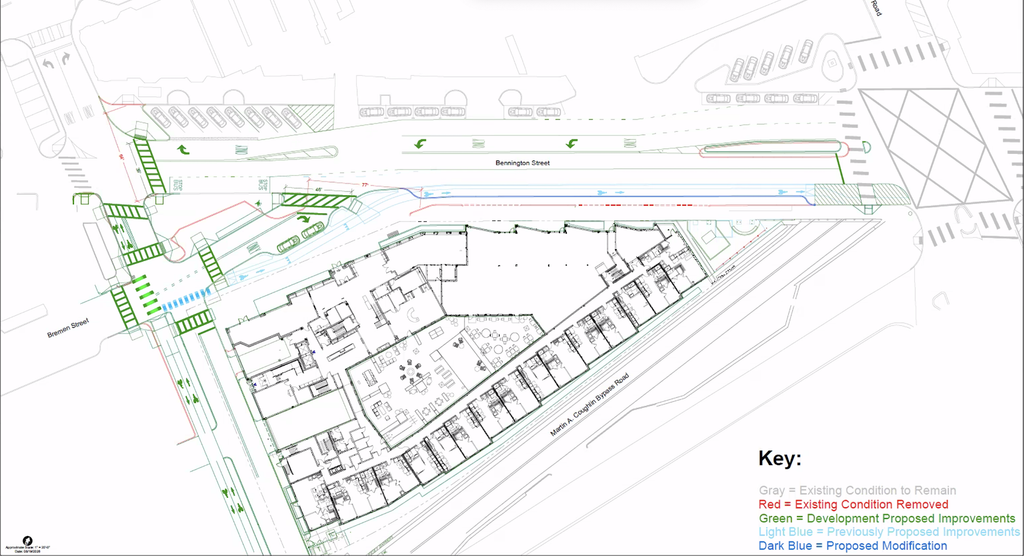
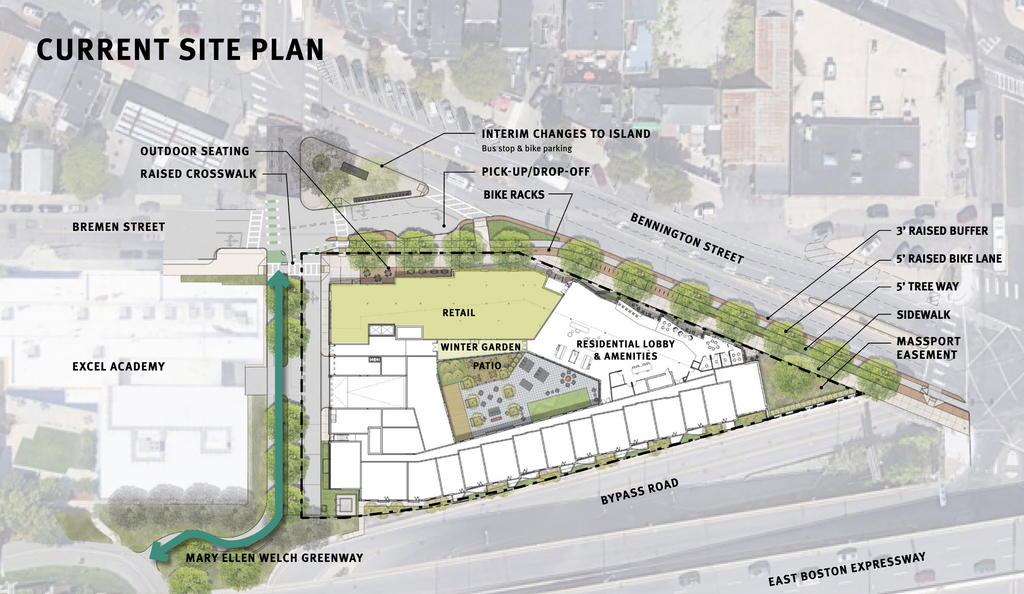
Yesterday, the Public Improvements Commission (PIC), chaired by former Chief of Streets Nick Gove, voted to replace a protected bike lane on Bennington Street with a handful of on-street parallel parking spaces.
This decision is in direct opposition to the City’s stated commitment to Vision Zero, the Climate Action Plan, and GoBoston 2030. It also is in direct opposition to Mayor Wu’s stated recommitment to safer streets and in opposition to the wishes of East Boston residents for safer and greener streets.
At yesterday’s hearing, which was the first, and only, opportunity for public comment on the revised proposal, every single testimony was in opposition to the removal of the protected bike lane. Despite this, the PIC, without discussion, cast a unanimous vote to approve the removal of the protected bike lane.
This is a betrayal to our community. No community groups were consulted. No residents were consulted. When the Mayor’s Office of Neighborhood Services and Councilor Coletta-Zapata’s staffers were pressed for information on the stakeholder engagement which resulted in this decision, the process remained unclear. When the developer was pressed on whether residents were consulted, it was stated that some of the business owners consulted are residents.
In response to the death of Louisa Gag, Mayor Wu published a letter outlining her next steps in making Boston’s streets safe for all. In it, she emphasized the importance of genuine community engagement. This case proves that this administration does not actually value community engagement, nor safe streets. If they did, they would have listened to the recommendations of GreenRoots, East Boston residents, and the 355 Bennington Street Impact Advisory Group members to retain the protected bike lane.
The Boston Cyclists Union is exasperated with the City’s continued backpedaling of safe streets and the lack of transparency. We urge this administration to reconsider their decision to prioritize a handful of parking spaces over the lives of its residents.